Let's clear something up right away.
Eating better doesn't mean giving up dessert.
Somewhere along the way, a lot of us started believing that making healthier choices meant the fun stuff had to go first. The cookies. The brownies. The post-dinner chocolate. The weekend baking project that dirties every bowl in the kitchen.
But these days, people are taking a more realistic approach. Instead of cutting out the foods they love completely, they're finding ways to enjoy them differently. And that approach tends to stick a lot longer.
Does Eating Better Mean You Have to Give Up Dessert?
No, and the evidence from how people actually maintain food habits backs this up.
Highly restrictive approaches to eating tend to work short term but are difficult to sustain. When enjoyable foods are removed entirely, everyday life starts to feel like a series of things you're not allowed to have. That friction adds up, and most people eventually return to previous habits, often feeling worse about it than if they'd never tried.
What tends to work better is a gradual, substitution-based approach. Making small swaps in the foods you already eat and enjoy, rather than removing them, means your routine doesn't have to change dramatically. The meals are the same. The occasions are the same. Just one or two ingredients are different.
Dessert doesn't have to be the casualty of eating better. It can stay on the menu, just made the saweet way.
Why Does the "I'll Never Eat Dessert Again" Mindset Usually Backfire?
Because it's built around removal rather than replacement, and it underestimates what food actually means in everyday life.
Food isn't just fuel. It's birthday cake with friends, fresh banana bread on a Sunday afternoon, a hot chocolate when it's cold outside, the brownie batter you're definitely supposed to leave alone while baking. Those moments are part of life, and an eating approach that writes them off entirely is one most people can't sustain.
The pattern tends to go like this: a strict rule is set on Monday. By Thursday, real life has made the rule feel impossible. One "slip" leads to abandoning the whole effort, rather than simply adjusting.
The problem isn't dessert. The problem is framing any food as permanently off limits, because it turns a normal human moment into a failure.
Swapping an ingredient is a fundamentally different kind of change. You still get the brownie. You still get the birthday cake. You've just made a smarter choice about one ingredient inside it.
What Are the Best Small Swaps for Reducing Sugar Without Giving Up Dessert?
The most sustainable sugar swaps are the ones that fit into your existing routine without requiring you to learn a new way of cooking.
Where to start:
- Coffee and tea - swapping sugar in everyday drinks is the lowest-effort change with the highest daily frequency. SaweetWay allulose dissolves smoothly in hot and cold liquids, making it a seamless switch
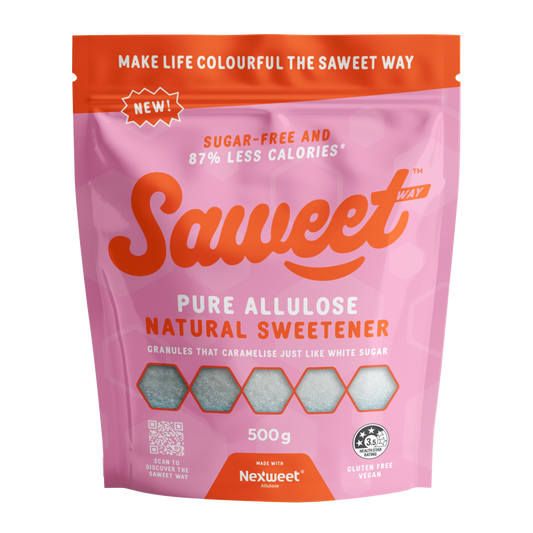
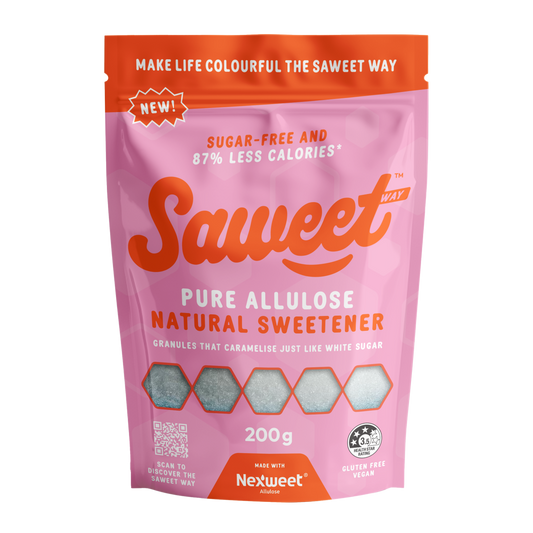
- Baking - use 1.25 cups of SaweetWay Pure Allulose Granules to replace 1 cup of sugar in cookies, banana bread, brownies, muffins, and cakes. The result is close enough to the original that most people can't tell the difference
- Sauces and dressings - allulose works well in savoury-sweet applications like marinades, glazes, and dressings
- No-bake treats - SaweetWay Pure Allulose Syrup suits bliss balls, slices, and desserts that don't need oven time
- Hot drinks and dessert toppings - stir allulose syrup through hot chocolate, porridge, or drizzle over desserts for clean, familiar sweetness
Start with the recipes you already make. Replacing sugar in a familiar bake means you'll notice how similar the result is - without the guesswork of a new recipe.
Why Does Allulose Work So Well in Dessert Recipes?
Allulose is a rare, naturally occurring sugar found in small amounts in figs, raisins, and jackfruit. It tastes and bakes like regular sugar - with approximately 87% fewer calories.
The reason it performs so well in desserts specifically comes down to how it behaves when heated:
- It browns and caramelises - giving baked goods that golden colour and slightly crisp edge that sugar creates
- It retains moisture - keeping cakes, muffins, and brownies soft rather than dry
- It doesn't crystallise when it cools
- It dissolves cleanly - no grittiness in drinks or batters
- No aftertaste - just clean, familiar sweetness
In practice, this means your cookies still taste like cookies. Your brownies still taste like brownies. Your hot chocolate still feels cosy. You've made a smarter ingredient choice, and nobody at the table would know.
How Is SaweetWay Different From Other Sugar Alternatives?
Most people who've tried sugar alternatives have a story about one that didn't work. The diet drink with the chemical aftertaste. The "sugar-free" biscuits that tasted nothing like the real thing. The artificial sweetener that was technically sweet — but left something unpleasant behind.
SaweetWay's allulose products are specifically designed to avoid those common failure points.
SaweetWay at a glance:
- Made with Nexweet® Allulose - produced via non-GMO enzymatic conversion
- 87% fewer calories than sugar (approx. 2 cal/tsp vs 16 cal/tsp for sugar)
- 70% as sweet as sugar - use 1.25 cups to replace 1 cup
- Browns, caramelises, and retains moisture in baking
- No crystallising, no aftertaste, no complicated conversions
- Vegan, keto-friendly, and gluten-free
- Backed by Saraya - a global food science company operating since 1952 in 80+ countries
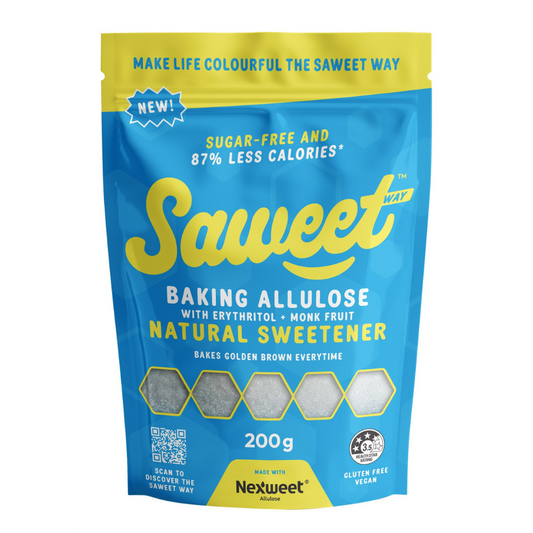
The range includes Pure Allulose Granules (200g and 4kg), Baking Allulose Granules with Erythritol and Monk Fruit (200g), and Pure Allulose Syrup (430g) - all available at saweetway.com.au.
What Does a Realistic, Sustainable Approach to Eating Better Actually Look Like?
It looks like real life - with a few smarter choices woven into it.
More home cooking. More attention to ingredients. Choosing whole foods where it's easy. Making a swap in your morning coffee. Baking your favourite recipe with one ingredient changed.
It doesn't look like giving up every food you enjoy, following strict rules, or feeling like you've failed every time you eat at a friend's birthday party.
The habits that last are the ones that don't make daily life feel restrictive. Tiny swaps still count. They add up quietly, and they don't require you to become a different person to maintain them.
Sweetness doesn't have to go. It just gets made the saweet way.
Frequently Asked Questions About Enjoying Dessert While Eating Better
Can you eat dessert and still maintain a balanced diet? Yes. Occasional sweet foods can absolutely be part of a balanced everyday diet. The key for most people is the frequency and the ingredients involved - making desserts at home with lower-calorie alternatives like allulose means you can enjoy them regularly as part of a normal routine, rather than as an occasional exception.
What is the best sugar substitute to use in homemade desserts? Allulose is widely regarded as one of the best sugar substitutes for homemade desserts because it browns, caramelises, and retains moisture like regular sugar. Unlike many alternatives, it doesn't crystallise or leave an aftertaste, making it suitable for cookies, cakes, brownies, banana bread, muffins, and most baked goods.
How much SaweetWay do you use instead of sugar in a dessert recipe? Use 1.25 cups of SaweetWay Pure Allulose Granules to replace every 1 cup of regular sugar. For the Baking Allulose Granules Blend (with erythritol and monk fruit), use a 1.15–1.2 ratio. Because allulose can brown slightly faster than sugar, reduce oven temperature by 10–15°C or check your bake a few minutes early.
Why do healthy dessert recipes often taste disappointing? Most "healthy" dessert recipes taste different because they rely on sugar alternatives that don't behave like sugar - they don't brown properly, they crystallise, or they leave an aftertaste. The fix isn't a different recipe; it's a better alternative. Allulose performs closely enough to sugar that familiar recipes can be used with minimal adjustment.
Is allulose suitable for people following a keto or low-sugar diet? Yes - SaweetWay allulose is keto-friendly, gluten-free, and vegan. Pure allulose contains no fructose, no sucrose, and no glucose, making it a versatile option across a range of dietary approaches. At approximately 2 calories per teaspoon (versus 16 for sugar), it contributes significantly fewer calories per serve.
Does using a sugar alternative in baking require completely different recipes? Not with allulose. The main adjustment is the conversion ratio - 1.25 cups of SaweetWay per cup of sugar - and checking baked goods a few minutes earlier due to faster browning. Beyond that, most everyday recipes work without significant changes. Starting with familiar recipes you already know is the easiest way to see how close the results are.
The Sweet Takeaway
You don't have to choose between eating better and enjoying dessert.
The best habits are almost always the ones that leave room for both, because an approach that removes everything enjoyable from daily life isn't one most people can maintain for very long.
At SaweetWay, that's exactly the point. Making everyday sugar swaps feel simple, delicious, and easy to stick with - so the brownies, the cookies, the banana bread, and all the sweet moments in between stay exactly where they belong.
Because life is sweeter when dessert is still on the menu ✨
Find your SaweetWay online here or at Woolworths.

Frequently Asked Questions
Why do sugar substitutes have an aftertaste?
Some sugar substitutes have an aftertaste because they activate bitter taste receptors alongside sweet ones, or linger on the tongue longer than sugar does. High-intensity artificial sweeteners like aspartame and saccharin are the most common culprits. Rare sugars like allulose tend to taste cleaner, closer to sugar itself.
Which sweetener tastes most like sugar?
Allulose is widely considered one of the closest sweeteners to sugar in taste and behaviour. It has no bitter aftertaste, dissolves and browns like sugar, and carries a clean, familiar sweetness, making it a popular choice for coffee, baking and everyday cooking.
Why are some sweeteners blended together?
Sweeteners are often blended because each one brings something different: sweetness, bulk, browning or mouthfeel. Combining them, like allulose with erythritol and monk fruit, balances the overall flavour so it tastes rounded and close to sugar, rather than leaning on any single note.
Does allulose taste like sugar?
Allulose tastes very close to sugar, with a clean, smooth sweetness and no lingering aftertaste. It's around 70% as sweet as sugar, so you'll use a little more (about 1.25 cups of allulose to replace 1 cup of sugar), but the flavour profile is familiar rather than artificial.
Is allulose good for baking?
Yes, allulose is a great choice for baking because it browns and caramelises like sugar and keeps baked goods soft and moist. It's also lovely blended with other sweeteners like erythritol and monk fruit, which is exactly how SaweetWay's Baking Allulose is made.