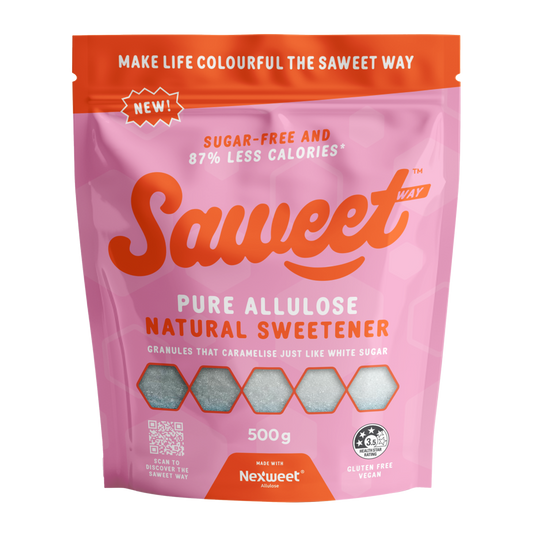
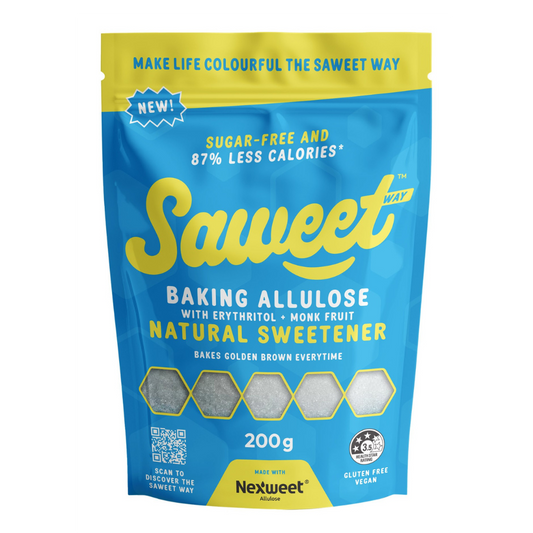
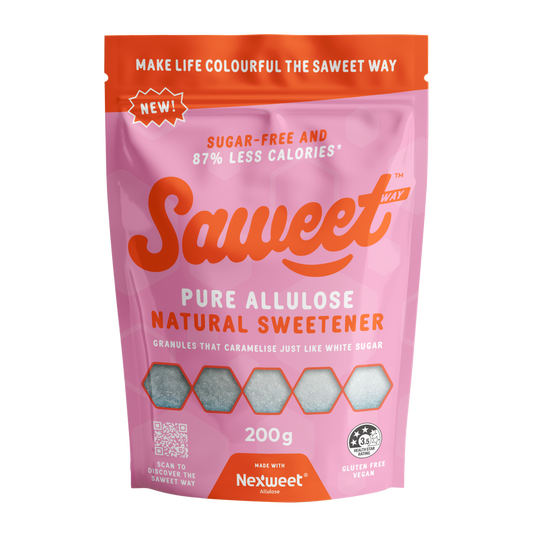
What Is Allulose and Why Everyone’s Talking About It?
Let’s be honest, sugar makes life sweeter. It’s comforting, familiar, and somehow sneaks into everything from your morning coffee to that “just one bite” dessert.
But as more people look for natural sugar alternatives to reduce their sugar intake, that still taste good and work in everyday cooking and baking, one ingredient keeps popping up: allulose.
You might’ve seen it on labels, heard it mentioned online, or spotted it in baking recipes. So what exactly is it and why is it getting so much attention?
Let’s break it down, no science degree required.
So… What Is Allulose?
Allulose is a naturally occurring rare sugar. That just means it exists in nature, but only in small amounts, you’ll find traces of it in foods like figs, raisins, wheat, and maple syrup.
What makes allulose interesting is how familiar it feels. It looks like sugar, tastes like sugar, and behaves like sugar when you cook with it, but it contributes far fewer calories than regular sugar. That’s why it’s often used as a natural sugar replacement.
In everyday terms, allulose:
- Is about 70% as sweet as sugar
- Has 87% less calories than sugar
- Dissolves easily in drinks
- Browns and caramelises when heated (and when blended with Erythritol and Monk Fruit Extract)
- Works beautifully in baking, sauces, and desserts
- It can make chilled and frozen desserts
- Perfect for making caramel sauces
In short? It acts like sugar where it matters most, in your recipes, but without the compromise.
Why People Are Curious About Allulose
Taste is only part of the story. When you eat something sweet, your body doesn’t just notice it on your tongue. Your digestive system also recognises sweetness and responds in its own way.
That’s why researchers have been interested in understanding how different sweeteners are recognised once they’re actually consumed, not to prove benefits, but to understand how they behave inside the body.
And that curiosity has led to some interesting observations.
What a Human Study Looked At
In one study, researchers looked at what happens after people consume different sweeteners.
Participants were given one of three things:
- Allulose
- Erythritol
- Water
Then researchers simply observed how the body responded, no treatments, no outcomes being measured, just normal digestive signals doing their thing.
One of the signals they looked at was a hormone called GLP-1.
GLP-1 is something your body naturally produces as part of digestion. It’s one of several signals released after eating that help the body recognise food has arrived. Totally normal, everyday stuff.
Alongside GLP-1, the study also looked at two other digestive signals:
- CCK
- PYY
Together, these are part of the body’s usual “we’ve eaten” messaging system.
So what did they notice?
Compared to water, both allulose and erythritol were associated with the release of these normal digestive signals, including GLP-1.1
Where things got interesting was how the body handled them beyond that.
In simple terms, the body recognised both as sweet, but they didn’t behave in exactly the same way once inside.1
This helped researchers better understand that different sweeteners can be processed differently, even when similar digestive signals are involved.
No big promises. No claims. Just a clearer picture of how sweetness is recognised beyond taste alone.1
What This Means for Everyday Cooking and Baking
From a practical point of view, the appeal of allulose is refreshingly simple.
It’s a natural sugar alternative that:
- Tastes familiar
- Works in heat
- Blends smoothly
- Makes sugar swaps easy
Whether you’re baking cookies, making caramel, or sweetening your morning coffee, allulose fits seamlessly into everyday food choices.
No complicated maths. No weird textures. Just a straightforward sugar replacement that performs.
The Saweet Takeaway
Allulose isn’t about taking sweetness out of your life. It’s about choosing a natural sugar alternative that keeps flavour, texture, and enjoyment front and centre.
Backed by careful research. Built for everyday use. And designed to keep sweet moments feeling… well, sweet.
Explore the Saweet range and see how allulose works in your cooking and baking here.
References
- Iida, T., et al. (2022). The Role of D-allulose and Erythritol on the Activity of the Gut Sweet Taste Receptor and Gastrointestinal Satiation Hormone Release in Humans: A Randomized, Controlled Trial. The Journal of Nutrition, 152(6), 1494–1504. Available at: https://pubmed.ncbi.nlm.nih.gov/35135006/